Parenting
An afternoon of play, with what you have
A clear little space and an open invitation can be enough to begin.
Published
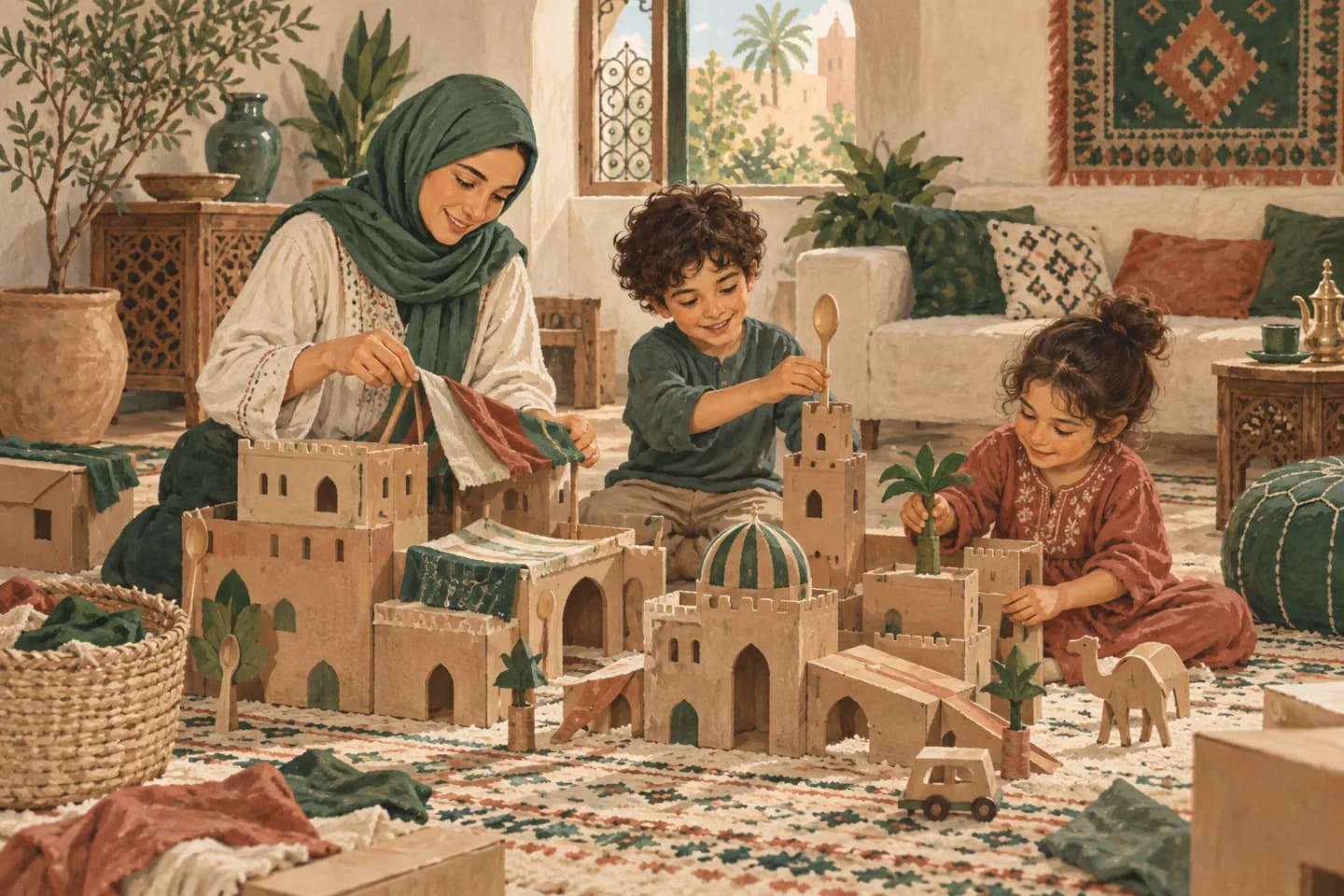
A clear little space and an open invitation can be enough to begin.
Choose a simple invitation
Offer age-appropriate materials such as large drawing paper or a familiar toy. Check objects for small parts, sharp edges, cords, and other hazards, and supervise appropriately. Skip a complicated finished example; let your child decide what the materials might become.
Follow one idea
If the paper becomes a pretend shop instead of a drawing, follow that interest. Ask whether your child would like you to join. You can be a customer, a listener, or the person holding the paper. There is no need to keep introducing new activities every few minutes.
Give the ending a shape
Offer a little notice before tidying. Let your child choose something to keep or photograph for themselves, with your help, without posting it publicly. Put a few materials aside for another day. An ordinary afternoon is allowed to end with an unfinished idea.
Offer one simple material and ask, “What could we make?”
A practical checklist
Use the ideas that fit your household and leave the rest. One small change is enough for a first try.
- Choose one safe material and clear a small area rather than filling the room.
- Offer an invitation without demonstrating a finished result to copy.
- Watch for the child’s idea before suggesting your own.
- Join only in the role the child accepts, or stay nearby as an observer.
- Give a warning before cleanup and save one part if the child wants to continue later.
When the plan needs to change
Children differ by age, temperament, communication, and the kind of day they are having. Try one change for several ordinary days, notice what becomes easier or harder, and adapt without turning the routine into a test. Ask a qualified professional about persistent developmental or wellbeing concerns.
Keep exploring
Build a screen-time routine your family can actually keep
Make a practical family media plan around sleep, shared spaces, useful content and calm transitions.
3 min read
When one sibling feels left out
Respond to sibling jealousy with safety, individual attention and practical family routines.
3 min read
A few minutes of talking together
Everyday narration can be a gentle way to share a moment with your baby.
2 min read