Parenting
A few minutes of talking together
Everyday narration can be a gentle way to share a moment with your baby.
Published

Everyday narration can be a gentle way to share a moment with your baby.
Use your own words
Describe a small thing happening around you: a curtain moving, a familiar person arriving, or the colour of your cup. Use a language you are comfortable speaking. You do not need a special script or to talk constantly; quiet moments belong in the day too.
Leave a little space
Pause after a sentence and notice your baby’s sounds, expressions, or movements. Respond as a conversation partner without expecting words. Follow signs that they want a break. This is shared time, not a test of attention or development.
Invite familiar voices
Another caregiver can use their own songs and expressions. Different accents and family languages can be part of the experience. If you have questions about hearing, communication, or development, ask a qualified professional instead of comparing your baby with an online checklist.
Describe one ordinary moment in the language that feels most natural.
A practical checklist
Use the ideas that fit your household and leave the rest. One small change is enough for a first try.
- Pick one familiar moment, such as changing clothes or looking through a window.
- Name two or three things you can both see or hear.
- Pause long enough to notice a look, sound, movement, or need for quiet.
- Reply to the response as if you are taking turns in a conversation.
- Let another caregiver repeat the moment in the language that feels natural to them.
When the plan needs to change
Children differ by age, temperament, communication, and the kind of day they are having. Try one change for several ordinary days, notice what becomes easier or harder, and adapt without turning the routine into a test. Ask a qualified professional about persistent developmental or wellbeing concerns.
Keep exploring
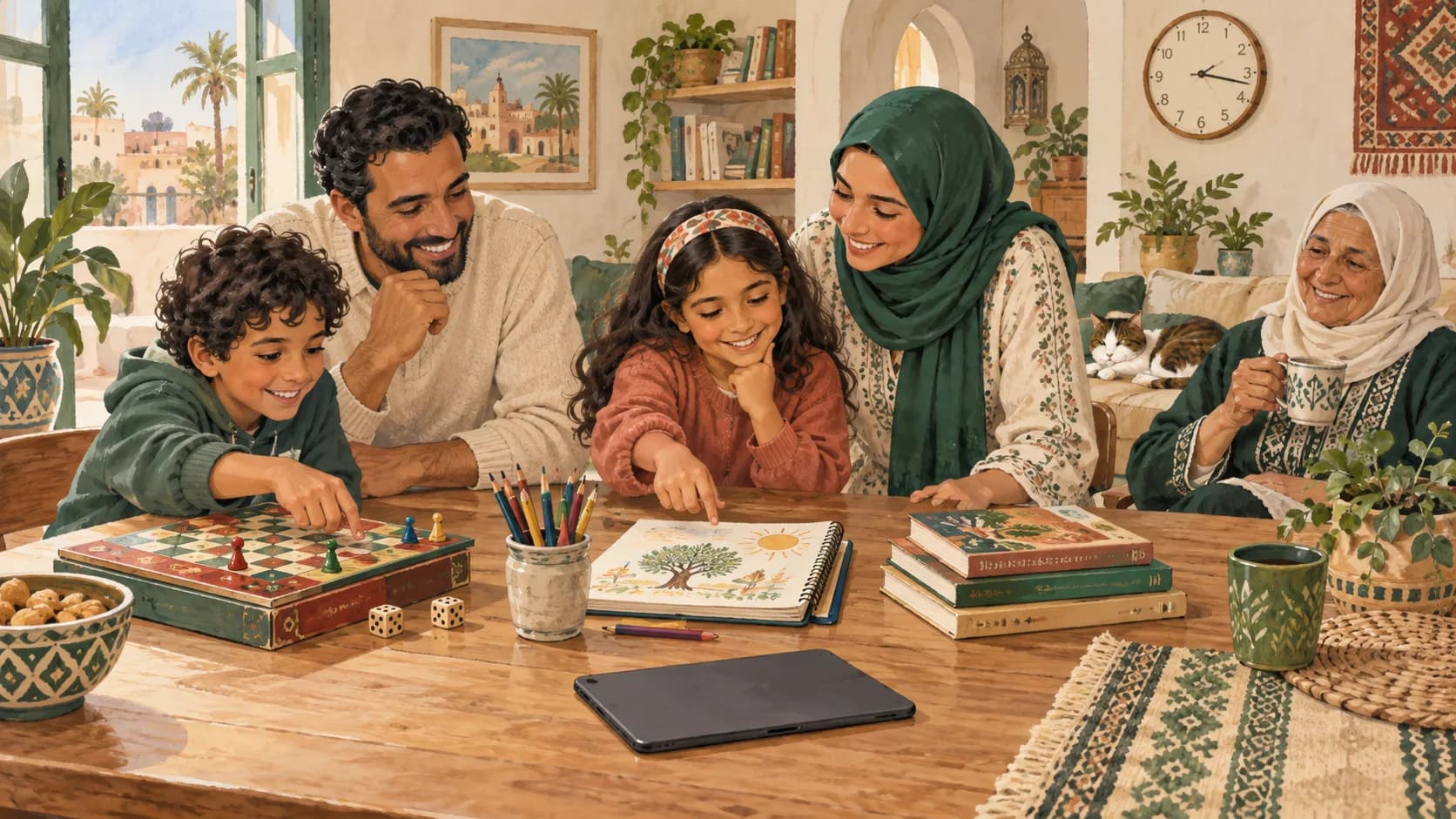
Build a screen-time routine your family can actually keep
Make a practical family media plan around sleep, shared spaces, useful content and calm transitions.
3 min read
When one sibling feels left out
Respond to sibling jealousy with safety, individual attention and practical family routines.
3 min read
An afternoon of play, with what you have
A clear little space and an open invitation can be enough to begin.
2 min read