Pregnancy & preparation
Pregnancy supplements: folic acid, iron and vitamin D
What to ask about prenatal supplements, why iron should be individualized, and what to check on labels.
Published
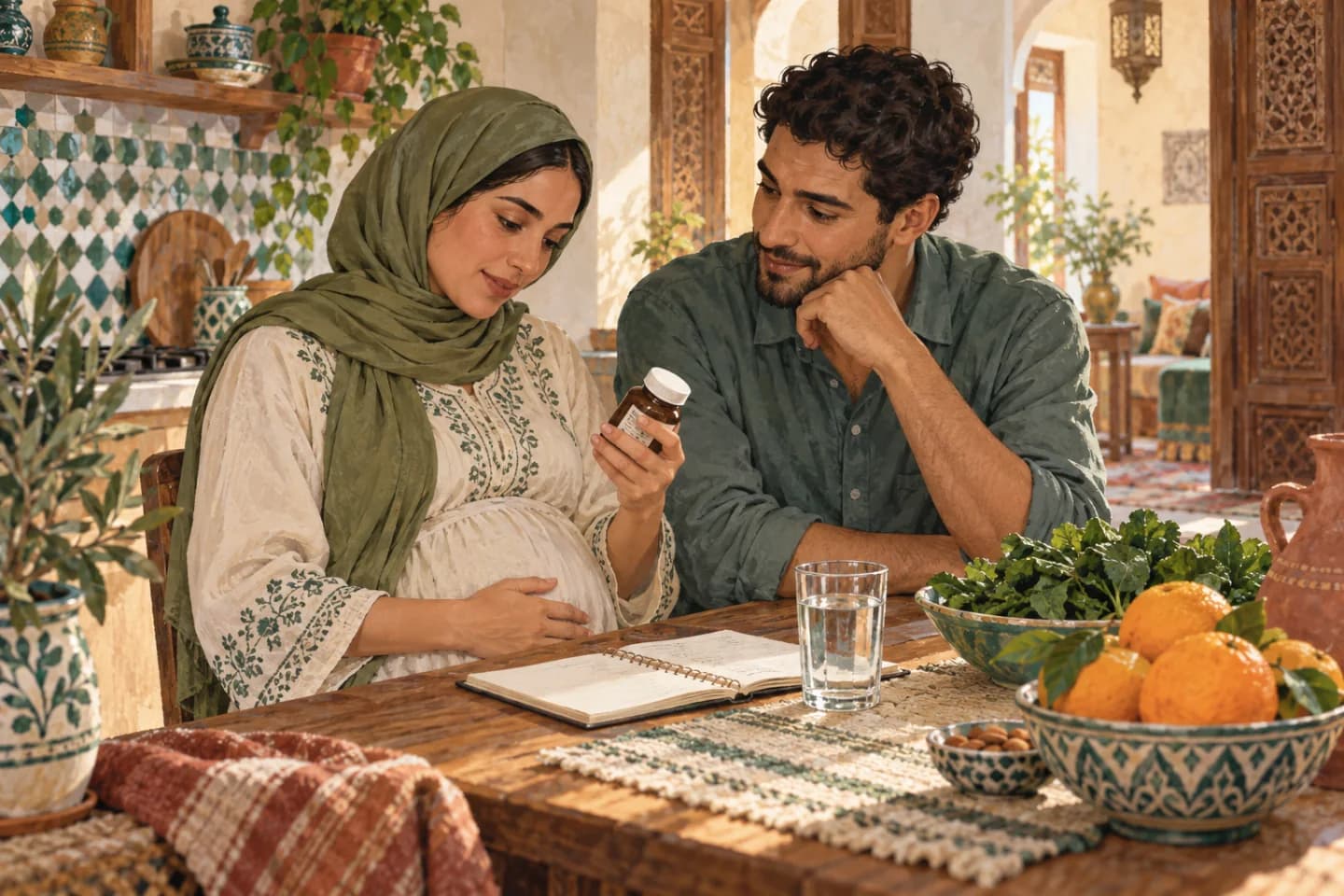
Supplements do not replace a varied diet, and “natural” does not automatically mean safe in pregnancy. Bring a list of everything you take to your prenatal appointment.
Folic acid early in pregnancy
NHS guidance recommends 400 micrograms of folic acid daily when trying to conceive or as soon as pregnancy is known, through the first 12 weeks. Some people need a higher prescribed dose because of their medical history or medication. Do not increase the dose yourself.
Ask about iron and vitamin D
Iron needs are assessed during prenatal care; your clinician may recommend supplements if tests show a need. Fatigue alone does not establish iron deficiency. Vitamin D advice depends on sunlight, skin tone, location and local guidance. Ask your care team what amount is right for you.
Read the label
Avoid supplements containing vitamin A as retinol or cod liver oil unless a qualified professional advises otherwise. Check combined products so you do not duplicate doses. Bring packaging or photos of all medicines, herbal products and supplements to your appointment.
Keep exploring

Exercise during pregnancy: moving safely
Moderate activity, practical adaptations and reasons to stop and contact your care team.
2 min read
Maternity clothes and baby essentials: what is worth buying?
A practical list for comfortable clothing, the birth bag and first baby supplies, with purchases you can delay.
2 min read
Pregnancy by trimester: what to arrange at each stage
A flexible guide to appointments, questions and urgent warning signs from early pregnancy to birth.
2 min read