Intimacy & relationships
Duas before marriage, on the wedding night and before intimacy
Read sourced Islamic prayers for marriage, the wedding night, marital intimacy and children, with Arabic texts, explanations and clear limits on fertility claims.
Published
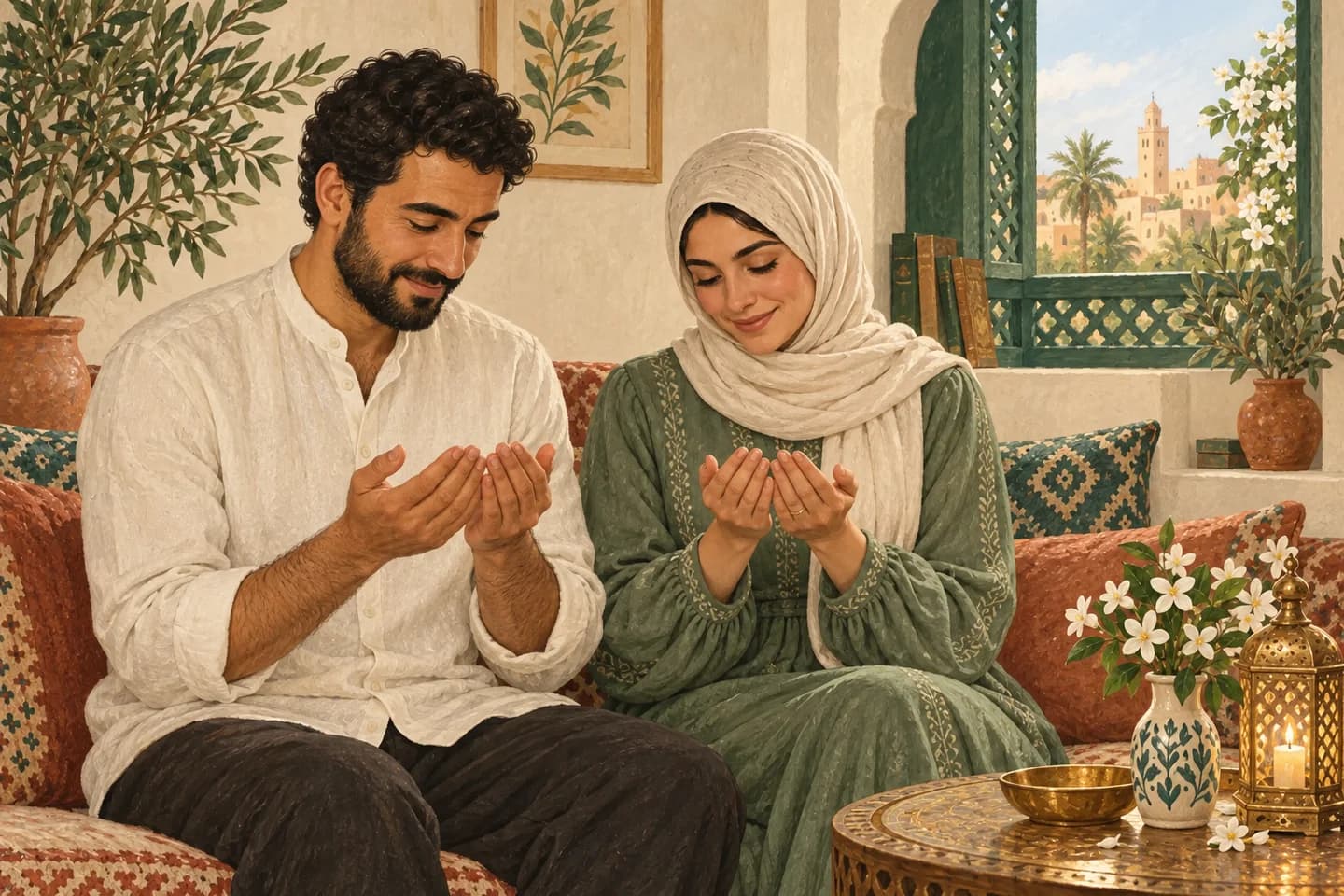
Wedding preparations often focus on the celebration and the home. Alongside those plans, Muslim couples may want to know which duas are reported for marriage, what to say on the wedding night, and whether there is a prayer before intimacy when hoping for a child.
There are reported supplications for these moments, but calling them all “prayers you must say” is misleading. A recommended dua is not a condition for a valid marriage, and none of the texts below promises conception. This guide distinguishes Quranic prayers, reported prophetic wording and personal supplications. English explanations convey the meaning; they are not the original Arabic text.
What can you pray before marriage?
The sources used here do not prescribe one compulsory prayer for everyone preparing to marry. Both partners can ask Allah for sound judgment, a good marriage and a caring family life. One relevant Quranic prayer is:
رَبَّنَا هَبْ لَنَا مِنْ أَزْوَاجِنَا وَذُرِّيَّاتِنَا قُرَّةَ أَعْيُنٍ وَاجْعَلْنَا لِلْمُتَّقِينَ إِمَامًا.
In Al-Furqan 25:74, the believers ask for spouses and descendants who bring them joy, and to be an example for the God-conscious. This is a prayer for a good family, not a formula tied to an engagement date or a particular hour before the marriage contract.
Personal words might be: “Allah, guide me to a wise choice and help me become an honest, compassionate spouse.” This is an example of a personal supplication, not a quotation from a hadith. Keep that distinction when sharing a prayer with others, and do not attach a guaranteed outcome or an unsupported repetition count to it.
Istikhara when considering a marriage
Istikhara asks Allah for guidance toward what is good when making a decision. Sahih al-Bukhari 6382 describes two voluntary units of prayer followed by the supplication, mentioning the matter under consideration.
The linked source contains the full wording. Its meaning includes asking that the matter be granted if it is good for one's religion, livelihood and eventual outcome, and turned away if it is harmful, while seeking contentment with what is good.
Give the practical decision attention too. Discuss responsibilities, housing, work and expectations about children. A search for the right prayer should leave room for honest conversations about the life you are considering together.
The wedding-night dua and its meaning
Sunan Abi Dawud 2160 records this supplication upon marriage. The linked edition lists the report as hasan according to al-Albani:
اللَّهُمَّ إِنِّي أَسْأَلُكَ خَيْرَهَا وَخَيْرَ مَا جَبَلْتَهَا عَلَيْهِ، وَأَعُوذُ بِكَ مِنْ شَرِّهَا وَمِنْ شَرِّ مَا جَبَلْتَهَا عَلَيْهِ.
The husband asks Allah for the good in his wife and in her disposition, and seeks protection from harm. The reference to her nature is not a reason to view her with suspicion. Egypt’s Dar al-Ifta describes this prayer as recommended and explains that seeking blessing in marriage is also open to the wife.
The reported wording addresses the husband. Either spouse can also use personal words, such as: “Allah, bless our marriage and help us treat each other with affection and mercy.” That example is not presented as the exact wording of a hadith.
Make space for a gentle beginning. Ask how your partner feels after a long wedding day, respect privacy and boundaries, and avoid turning the evening into a test of memorisation or a pressured timetable.
A prayer for congratulating newlyweds
The greeting recorded in Sunan Abi Dawud 2130 is:
بَارَكَ اللَّهُ لَكَ وَبَارَكَ عَلَيْكَ وَجَمَعَ بَيْنَكُمَا فِي خَيْرٍ.
It asks Allah to bless the newly married person and unite the couple in goodness. This is a congratulatory prayer said to a newlywed; it serves a different purpose from the supplication before intimacy. It can accompany a personal message wishing the couple well.
The dua before intercourse when hoping for a child
The reported prayer before marital intercourse is:
بِسْمِ اللَّهِ، اللَّهُمَّ جَنِّبْنَا الشَّيْطَانَ، وَجَنِّبِ الشَّيْطَانَ مَا رَزَقْتَنَا.
It appears in Sahih al-Bukhari 141. Its meaning is to begin in Allah’s name and ask Him to keep Satan away from the couple and from the child He may grant them. Its place is before intercourse. The report does not restrict it to the wedding night or to couples actively trying to conceive.
The hadith speaks conditionally about a child being decreed from the union. It does not promise pregnancy on that occasion or offer a way to choose a baby's sex. Treating it as a fertility test would misrepresent the text.
A Quranic prayer for children
Zakariya's prayer in Ali Imran 3:38 includes:
رَبِّ هَبْ لِي مِنْ لَدُنْكَ ذُرِّيَّةً طَيِّبَةً إِنَّكَ سَمِيعُ الدُّعَاءِ.
He asks his Lord to grant him good offspring, acknowledging that Allah hears supplication. The verse does not assign this prayer specifically to the moment before intercourse or prescribe a number of repetitions.
Couples can pray with hope without treating online promises of pregnancy within a set number of days as religious evidence. A delay in conception is not a reason to accuse either spouse of insufficient prayer or faith. Seeking medical advice when needed can accompany prayer.
Common questions about marriage duas
Is the wedding-night dua compulsory?
Dar al-Ifta describes it as recommended. It should not be presented as a condition for a valid marriage or as a ritual the couple must fear getting wrong.
Is the prayer before intimacy only for the first night?
The Bukhari report does not limit it to the first night. It relates to approaching marital intercourse, not the wedding date.
Do these prayers guarantee a boy, a girl or pregnancy?
None of the cited texts gives that guarantee. Asking for good offspring does not specify a child's sex or a conception deadline.
Can the wife pray for a blessed marriage too?
Yes. Dar al-Ifta explicitly includes the wife in seeking goodness and blessing. Personal supplications should be distinguished from the exact words of a reported hadith.
How can I check a prayer shared on social media?
Look for the Quranic reference or the hadith collection and number, then read the source. Be especially cautious about guaranteed results and fixed repetition counts without evidence. For a ruling about your own circumstances, consult a trusted qualified religious authority.
For practical support with early conversations, read Making space for an honest conversation as a couple.
Sources & further reading
Quran — Al-Furqan 25:74 ↗Quran — Ali Imran 3:38 ↗Sahih al-Bukhari 6382 — istikhara ↗Sunan Abi Dawud 2160 — prayer upon marriage ↗Sunan Abi Dawud 2130 — congratulating newlyweds ↗Sahih al-Bukhari 141 — prayer before intercourse ↗Egypt’s Dar al-Ifta — supplication on the wedding night (Arabic) ↗Keep exploring
When partners want different amounts of intimacy
Talk about differences in sexual desire with respect, consent and room for each person's needs.
3 min read
Avocado and sexual health: useful food or natural booster?
Avocado contains unsaturated fat and fibre and can fit a heart-supportive eating pattern, but it is not a direct treatment for erection difficulty or low desire.
3 min read
Coconut and sexual health: nutrition versus exaggerated promises
Coconut flesh, water, milk, and oil differ nutritionally, and none is proven to treat erectile dysfunction or directly increase libido.
4 min read